10 keys to effective planning
Planning shouldn’t be an annual exercise that produces a static budget and gets filed away. At leading organizations, planning is a continuous, decision-driving capability that enables leaders to respond quickly, allocate resources confidently, and stay aligned to what matters most.
So what separates effective planning from everything else?
It comes down to two things: strong governance that drives action and decision-grade models that build confidence. Together, these form the foundation for planning processes that are both disciplined and adaptable.
Below are the 10 keys to making that happen.
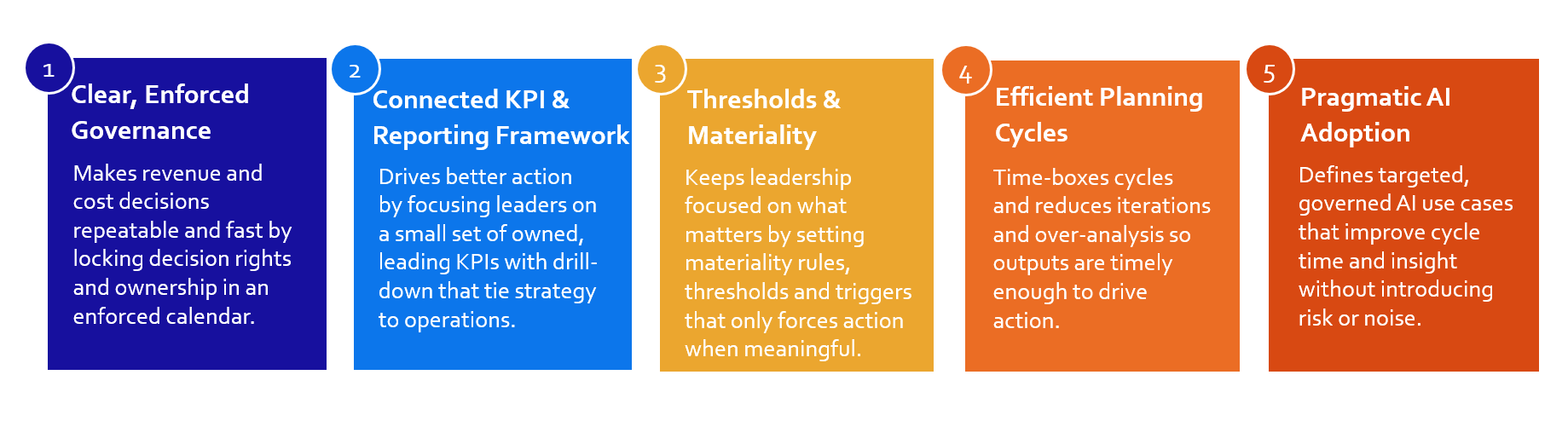
Clear governance and outcome-focused reporting
Effective planning starts with structure. The goal is to create clarity around how decisions are made, who owns them, and when action is required.
Clear, enforced governance ensures planning runs on a shared charter, with defined decision rights, owners, and escalation thresholds. This prevents surprises and ensures material changes are addressed early, before they become missed targets.
Outcome-focused reporting brings that governance to life. By connecting strategy to a focused set of KPIs, organizations can highlight leading indicators, surface exceptions, and quickly drill into the issues that truly impact performance.
The result: faster decisions, less noise, and alignment around what drives value.
Decision-grade planning models
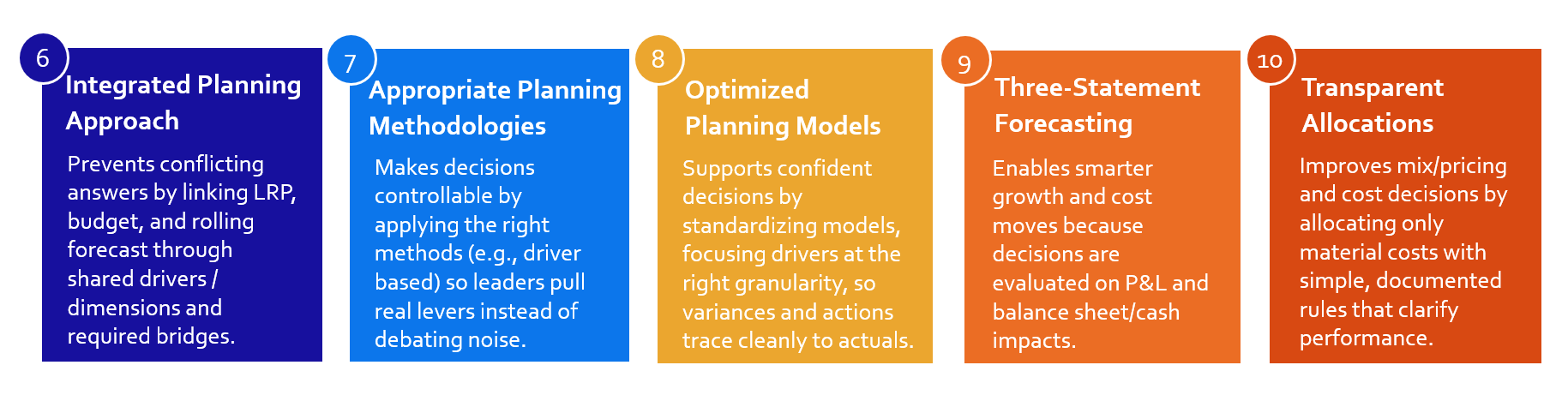
Even the best governance falls short without models leaders can trust.
Decision-grade planning models connect the full planning ecosystem, from long-range planning to budgets to forecasts, using consistent drivers and dimensions. This creates a single, transparent view of performance and ensures that every decision shows its full impact.
When models are aligned and intuitive, leaders spend less time debating the numbers and more time acting on them.
Bringing it all together
Effective planning isn’t about adding more detail, more reports, or more cycles. It’s about creating clarity. Clarity in how decisions are made, what matters most, and how actions translate into outcomes.
Organizations that get this right move faster. They spend less time reconciling numbers and more time driving performance. And they build planning processes that scale with the business, rather than slow it down.
The 10 keys outlined here aren’t standalone improvements, they work together. Strong governance ensures the right conversations happen. Decision-grade models ensure those conversations lead to confident action.
That’s what turns planning from a process into a competitive advantage.
If you’re looking to go deeper into how effective FP&A can drive better decisions and increase profitability, explore our playbook for a more detailed look at the strategies, frameworks, and real-world applications behind these concepts.